
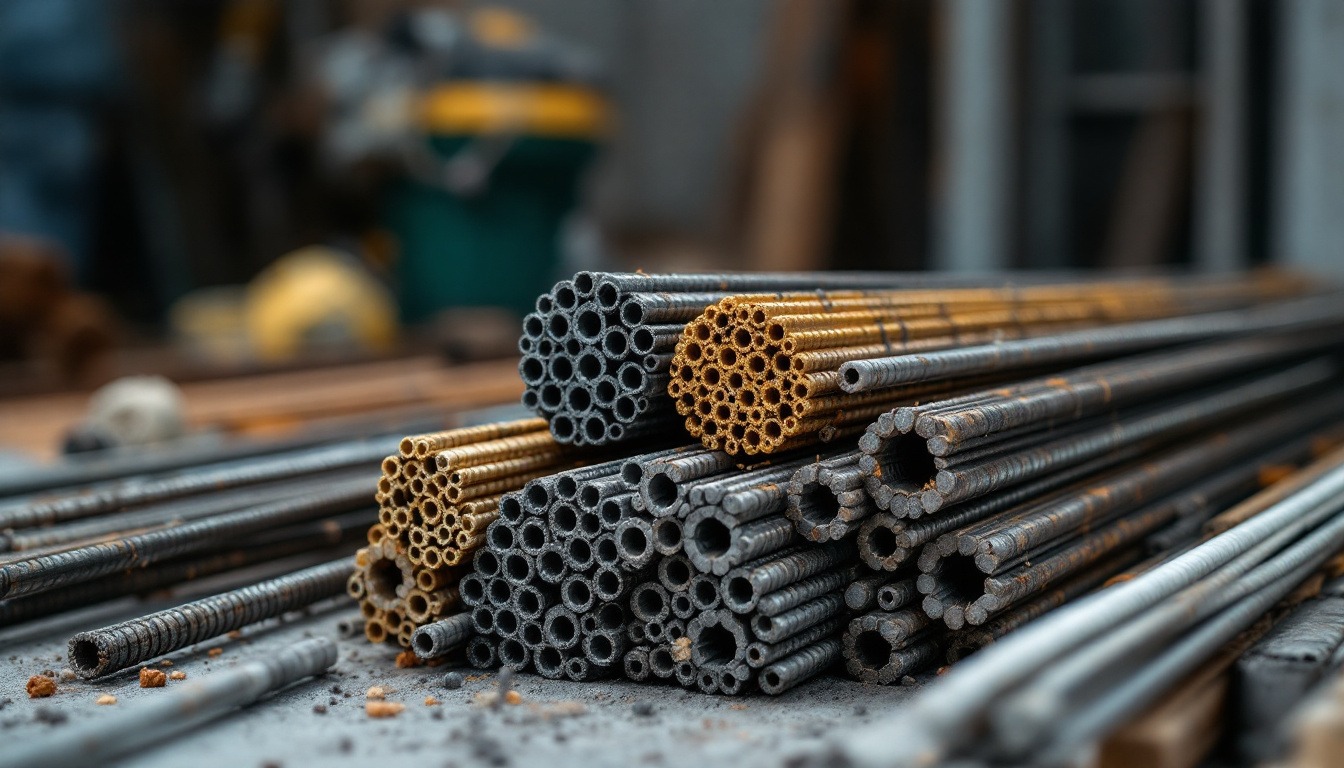
Top 5 Mistakes to Avoid When Installing Reobars on Site
Reinforcing bars are crucial for concrete structures, but mistakes in rebar installation are still a leading cause of structural failure and expensive repairs. When these steel reinforcements are not installed correctly, the effects go beyond immediate construction issues—they threaten the entire lifespan and safety of the building.
The stakes are especially high because concrete, while strong under compression, depends entirely on Reobars for strength against pulling forces. Even a single mistake in positioning, spacing, or securing these steel reinforcements can create weak spots that may show up years later as cracks, instability, or catastrophic failure. These problems often arise when it’s too late and too costly to fix.
This guide looks at the top 5 mistakes to avoid when installing rebars on site, based on industry standards and real-world construction challenges. Whether you’re a site supervisor, contractor, or construction professional, knowing these critical errors in concrete rebar installation will help you:
- Prevent weaknesses in the structure before pouring concrete
- Ensure compliance with building codes and engineering specifications
- Protect your investment from early deterioration
- Safeguard the longevity and safety of the structure
Each mistake discussed here is a failure point that can be avoided. By identifying and steering clear of these errors with reinforcing bars, you’ll lay down a foundation for construction excellence that endures.
What Are the Risks of Inadequate Concrete Cover and Corrosion Exposure?
Inadequate concrete cover thickness directly exposes reinforcing steel to moisture, oxygen, and aggressive chemicals, triggering rebar corrosion that weakens structural integrity. The concrete cover acts as a protective barrier, preventing environmental elements from reaching the steel whilst maintaining the alkaline environment that naturally passivates the rebar surface.
Understanding Concrete Cover and Its Protective Function
Concrete cover refers to the minimum distance between the outer surface of reinforcing steel and the nearest concrete face. This layer serves multiple critical functions beyond simple protection. The alkaline nature of concrete (pH 12-13) creates a passive oxide film on the rebar surface, preventing oxidation under normal conditions. When cover thickness falls below specified requirements, this protective mechanism fails.
Building codes mandate specific cover depths based on exposure conditions:
- Internal elements: 20-25mm minimum cover
- External elements: 40-50mm depending on climate
- Ground-contact elements: 75mm or greater
- Marine environments: 60-75mm with enhanced specifications
How Insufficient Cover Accelerates Structural Deterioration
Rebar corrosion begins when chlorides, carbon dioxide, or moisture penetrate through inadequate cover. The oxidation process expands the steel volume by up to 600%, generating internal pressures that crack and spall the surrounding concrete. These cracks create pathways for accelerated ingress of corrosive agents, establishing a destructive cycle.
Carbonation represents another significant threat. Atmospheric carbon dioxide reacts with calcium hydroxide in concrete, reducing pH levels and destroying the passive layer protecting the rebar. Thin cover allows carbonation to reach the steel within 5-10 years in typical urban environments, compared to 30-50 years with proper cover thickness.
Common consequences of inadequate cover include:
- Surface cracking parallel to rebar lines
- Concrete spalling and delamination
- Reduced load-bearing capacity
- Structural instability requiring costly repairs
- Premature failure of critical elements
The Chemistry Behind Rebar Corrosion
Corrosion occurs through an electrochemical process requiring four elements: anode, cathode, electrolyte, and electrical connection. In this context, it’s crucial to understand how insufficient concrete cover can exacerbate these issues, leading to severe structural damage over time.
Moreover, the role of environmental factors in accelerating this deterioration cannot be overlooked.
How Does Incorrect Bar Spacing and Placement Affect Structural Strength?
Incorrect bar spacing and placement directly compromises a structure’s ability to handle loads, creating weak points that can lead to cracking, deflection, and eventual failure. When reinforcement bars aren’t positioned according to engineering specifications, the concrete cannot distribute stress evenly throughout the structure.
The Critical Role of Design-Specified Spacing
Rebar spacing requirements exist to ensure uniform load distribution across concrete members. Engineers calculate precise distances between bars based on the expected loads, structural dimensions, and concrete properties. Deviating from these specifications creates zones where concrete bears excessive stress without adequate reinforcement support.
Proper spacing allows concrete and steel to work as a composite material. The concrete resists compression whilst the rebar handles tensile forces. When bars sit too close together, concrete cannot flow properly between them during pouring, creating voids and honeycomb defects. Conversely, excessive spacing leaves large concrete sections without sufficient reinforcement to control cracking under tension.
Standard Spacing Guidelines for Different Applications
Residential slabs typically require rebar spacing between 12 to 18 inches in both directions. This configuration provides adequate support for typical domestic loads including furniture, appliances, and foot traffic. Ground-bearing slabs often use 16-inch centres as a standard, though heavier load areas like garages may need closer spacing.
Walls demand tighter spacing due to lateral pressures from soil, wind, or retained materials. Vertical bars commonly sit at 12-inch centres, whilst horizontal bars may range from 8 to 16 inches depending on wall height and loading conditions. Basement walls facing significant soil pressure require closer spacing than above-ground partition walls.
Suspended slabs and beams follow more complex spacing rules based on span length and load calculations. Main reinforcement typically sits closer together in high-stress zones near supports, whilst distribution bars maintain wider spacing to control shrinkage cracking.
Consequences of Bar Placement Errors
Load distribution suffers immediately when bars aren’t positioned correctly. A slab with irregular spacing develops concentrated stress points where inadequate reinforcement exists. These areas crack prematurely under normal loads, allowing moisture penetration that accelerates deterioration.
Vertical placement errors prove equally damaging. If vertical bars are installed too high or too low within a beam or column, their effectiveness in resisting bending moments gets compromised. This misalignment leads to unexpected deflections and potential failure under vertical loads.
In summary, incorrect bar spacing and placement have severe implications for structural strength. Adhering strictly to design specifications is crucial in ensuring proper load transfer mechanisms are established within concrete elements.
Why Is Proper Rebar Tying and Lap Joint Execution Crucial?
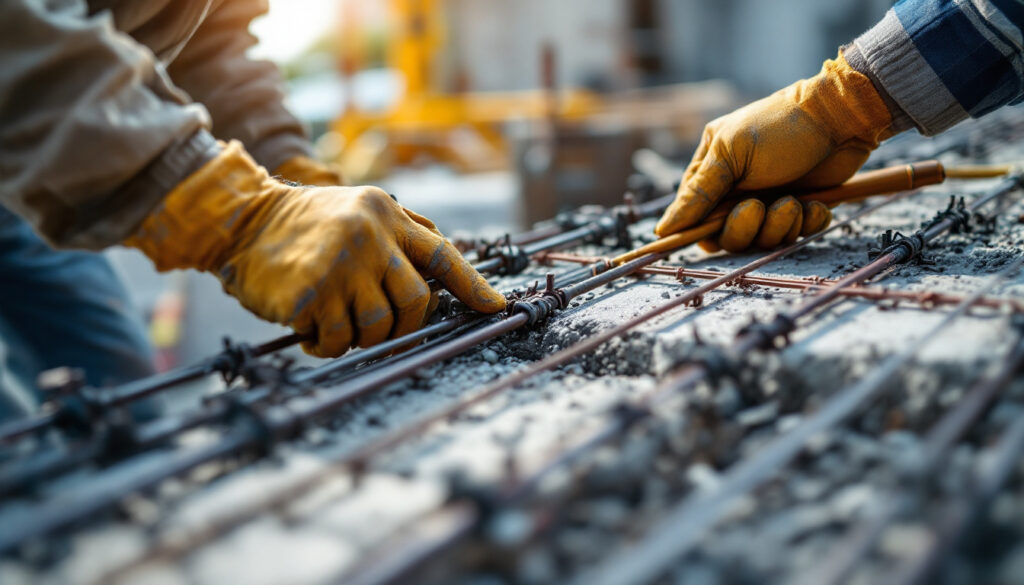
Proper rebar tying and lap joint execution directly determines whether the reinforcement maintains its designed position during concrete pouring and throughout the structure’s lifespan. Poor tying allows rebars to shift under the weight and pressure of wet concrete, creating weak points that compromise the entire structural system.
The Critical Role of Rebar Tying Methods
Rebar tying methods serve as the foundation for maintaining precise bar positioning until the concrete sets. The figure-eight tie stands out as the most reliable technique for securing intersecting bars, creating a tight connection that resists movement in multiple directions. This method wraps wire around both bars in a crossing pattern, preventing rotation and lateral displacement during concrete placement.
Simple single-loop ties often fail at critical moments when concrete flows around the reinforcement. Workers who rush through tying or use inadequate wire gauge risk seeing their carefully positioned rebars shift several centimetres out of alignment. A 5-centimetre displacement in a structural beam can reduce load-bearing capacity by up to 20%, turning a properly designed element into a liability.
Essential tying practices include:
- Using 16-gauge or 18-gauge annealed wire for adequate strength
- Securing all intersections in two-way slabs and beams
- Applying double ties at corners and critical stress points
- Checking tie tension to prevent loosening during concrete vibration
- Positioning ties away from the concrete surface to avoid rust staining
Understanding Lap Splice Length Requirements
Lap splice length requirements exist because rebar comes in standard lengths that rarely match the continuous reinforcement needed in most structures. The splice transfers stress from one bar to the next through the surrounding concrete, requiring sufficient overlap to prevent bond failure.
Design codes specify minimum lap lengths based on bar diameter, concrete strength, and the stress level in the reinforcement. The common requirement of 40 times the bar diameter applies to tension zones where bars experience pulling forces. A 16mm diameter bar would need a 640mm lap length under standard conditions. Compression zones may allow shorter laps, but site teams must verify requirements with structural drawings.
Inadequate lap lengths create one of the most dangerous hidden defects in concrete construction. The bars may appear properly installed, yet fail catastrophically under load due to insufficient bonding between spliced sections.
What Are the Consequences of Using Low-Quality or Incorrect Rebars?
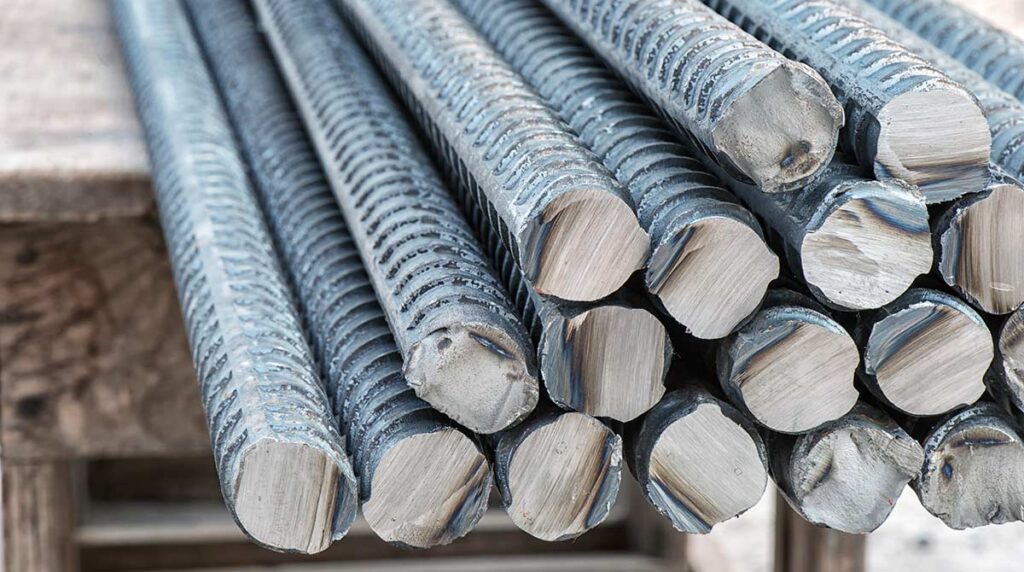
Using low-quality reinforcing bars can lead to serious structural failures, early deterioration, and costly repair work. The quality of rebars directly affects the strength and lifespan of concrete structures, making material selection one of the most important decisions in construction.
The Critical Role of Certified Rebar Suppliers
Certified rebar suppliers provide materials that meet strict industry standards and undergo thorough testing processes. These suppliers keep records proving their products comply with specifications such as BS 4449 or equivalent international standards. Buying from uncertified sources introduces uncertainty about the steel’s chemical composition, tensile strength, and ductility—properties that cannot be verified through visual inspection alone.
Mill markings stamped on rebars serve as traceable identifiers, confirming the manufacturer, grade, and batch number. These markings allow engineers and inspectors to verify that the delivered materials match project specifications. Without proper mill markings, tracing defective materials becomes impossible, leaving contractors vulnerable to liability issues and potential legal disputes.
Material testing certificates should accompany every rebar delivery, documenting:
- Yield strength and ultimate tensile strength values
- Chemical composition analysis showing carbon, manganese, and sulphur content
- Elongation percentages confirming ductility requirements
- Bend test results verifying the bar’s ability to deform without cracking
Hidden Dangers of Damaged Rebars
Damaged rebars compromise structural integrity in ways that may not become apparent until after concrete placement. Surface cracks, deep gouges, or kinks create stress concentration points where failure initiates under load. A bent rebar that appears salvageable might have microscopic fractures in its crystalline structure, reducing its load-carrying capacity by 30% or more.
Heavy corrosion presents another serious concern. Whilst light surface rust (mill scale) is generally acceptable and can even improve bonding with concrete, advanced corrosion reduces the effective cross-sectional area of the bar. A rebar with 10% section loss due to corrosion provides only 90% of its intended strength, creating a hidden weakness in the structure.
Damage assessment requires careful inspection:
- Guidelines for assessing rebar damage suggest looking for signs such as excessive rusting or physical deformities.
- Furthermore, comprehensive material testing is crucial in identifying any hidden issues with the rebars before they are used in construction.
How Can Insufficient Anchorage and Neglecting Expansion Gaps Compromise Stability?
Inadequate rebar anchorage length and missing expansion joints create structural vulnerabilities that can lead to catastrophic failures. When rebars aren’t properly anchored or thermal movement isn’t accommodated, the entire load-bearing capacity of concrete structures becomes compromised, resulting in cracks, displacement, and potential collapse.
Understanding Rebar Anchorage Requirements
Rebar anchorage length refers to the minimum distance a reinforcing bar must extend into concrete to develop its full tensile strength through bond stress. Engineering specifications dictate precise anchorage requirements based on bar diameter, concrete strength, and the type of stress the rebar will experience.
The basic principle behind anchorage is simple: rebars transfer loads to concrete through surface friction and mechanical interlock. When anchorage lengths fall short of design requirements, this bond fails prematurely. The rebar essentially pulls out of the concrete under stress rather than distributing the load effectively throughout the structure.
Standard anchorage calculations typically require:
- Straight bar anchorage: 40-60 times the bar diameter in normal-strength concrete
- Hooked bar anchorage: Reduced length requirements due to mechanical advantage
- High-stress zones: Extended anchorage lengths in tension-critical areas
The Role of Hooks and Mechanical Anchors
Standard 90-degree or 180-degree hooks at rebar ends significantly enhance anchorage performance. These bends create mechanical resistance that supplements the bond between steel and concrete. The hook prevents the bar from pulling straight through the concrete even if the bond along the straight portion begins to fail.
Mechanical anchors provide an alternative solution where space constraints prevent adequate straight anchorage length. These devices—including plates, nuts, and specially designed anchor heads—create positive mechanical connections that don’t rely solely on bond stress. They prove particularly valuable in:
- Beam-column connections with limited development space
- Retrofit applications where existing structures require reinforcement
- High-load transfer points demanding extra security
- Thin structural elements where standard anchorage lengths cannot fit
Ignoring mechanical anchor specifications when drawings require them creates weak points where rebars may slip under load. The concrete around inadequately anchored bars becomes susceptible to cracking or crushing, compromising overall stability.
To further understand how these factors contribute to structural integrity, it’s essential to explore the impact of insufficient rebar anchorage, which can lead to severe consequences if not addressed properly.
What Additional Best Practices Ensure Quality Rebar Installation?
Quality rebar installation extends beyond avoiding the top 5 mistakes to avoid when installing rebars on site—it requires systematic verification and adherence to proven construction protocols. Implementing comprehensive quality control measures protects your investment and ensures structural reliability.
Conducting Pre-Pour Inspections
Concrete inspection before pouring serves as your final checkpoint for identifying installation errors. Verify that rebar positioning matches engineering drawings precisely, checking cover distances, spacing intervals, and tie wire security. Document any deviations immediately and consult structural engineers before proceeding. This critical step prevents irreversible mistakes once concrete flows.
Inspection checklists should include:
- Verification of bar sizes and grades against specifications
- Confirmation of proper chair placement and support systems
- Assessment of cleanliness (remove debris, oil, or loose rust)
- Validation of splice locations and lap lengths
Controlling Water Content During Concrete Placement
Excess water addition during pouring represents a silent threat to concrete strength. Each additional litre of water beyond design specifications reduces compressive strength and increases permeability. Resist the temptation to improve workability through water addition—instead, use approved plasticisers or adjust placement techniques.
Implementing Proper Curing Protocols
The concrete curing process directly determines whether your structure achieves design strength. Maintain adequate moisture and temperature conditions for at least seven days, with 28 days ideal for full strength development. Apply curing compounds, wet coverings, or plastic sheeting immediately after finishing to prevent premature moisture loss.
Ensuring Regulatory Compliance
Local building codes compliance isn’t optional—it’s mandatory for legal operation and structural safety. Building regulations evolve regularly to incorporate new research and safety standards. Subscribe to updates from your local authority, attend industry workshops, and maintain relationships with building inspectors who can clarify requirements specific to your region.
Conclusion
Avoiding rebar installation errors directly translates to stronger, more durable concrete structures that stand the test of time. Each mistake covered—from inadequate concrete cover and incorrect spacing to poor tying techniques, substandard materials, and insufficient anchorage—can individually compromise your project’s structural integrity.
The five critical mistakes outlined in this guide represent the difference between a structure that performs reliably for decades and one that requires premature repairs or, worse, poses safety risks. Enhancing concrete longevity begins at the installation phase, where attention to detail and adherence to engineering specifications create the foundation for success.
Structural safety tips aren’t merely recommendations; they’re essential practices that protect both your investment and the people who will use the structure. By sourcing quality materials from certified suppliers, maintaining proper spacing and cover, executing correct tying and lap joints, ensuring adequate anchorage, and accommodating thermal movement, you’re building with confidence.
The construction industry demands precision and accountability. Stay informed about local building codes, conduct thorough pre-pour inspections, and never compromise on material quality or installation standards. Your commitment to these Top 5 Mistakes to Avoid When Installing Rebars on Site ensures every project meets—and exceeds—safety expectations.
Ready to elevate your rebar installation practices? Implement these guidelines on your next project and experience the difference that proper technique makes in structural performance and longevity.
See Also: Formply Australia How to Source Durable Panels for Heavy Concrete Loads.
FAQs: Rebar Installation and Structural Integrity
Proper rebar installation ensures that concrete structures can resist both compressive and tensile stresses. Incorrect positioning, spacing, or tying can lead to weak zones, cracks, and even structural failure over time. Rebars act as the skeleton of reinforced concrete, giving it the tensile strength concrete naturally lacks.
Concrete cover protects reinforcing bars from environmental exposure such as moisture, oxygen, and chlorides that cause corrosion. Adequate cover also maintains the alkaline environment necessary to prevent steel oxidation. Insufficient cover accelerates rusting and reduces the structure’s durability and lifespan.
Incorrect bar spacing disrupts load distribution within the concrete element. Bars placed too close together prevent concrete from flowing evenly, creating voids or honeycombs, while excessive spacing leaves large unreinforced zones prone to cracking and deflection under load.
Low-quality rebars can have inconsistent tensile strength, poor ductility, or high impurity levels, leading to premature failure under stress. Uncertified steel may corrode faster, deform unpredictably, and compromise compliance with building codes, resulting in safety hazards and expensive repairs.
Rebar tying keeps reinforcement in the exact designed position during concrete placement. If bars shift due to weak or insufficient ties, the structure loses its intended strength and alignment. Correct tying—such as figure-eight or double-twist ties—ensures stability during vibration and pouring.
Lap joints transfer load between rebars. If the overlap (lap splice length) is too short, the stress transfer becomes inadequate, leading to cracking or bond failure. Following the standard lap length—usually 40 times the bar diameter—is crucial to ensure structural continuity and strength.